








How Melisa Ryan Built Palm to Ivy into a Boutique College Admissions Consulting Firm
May 19, 2026

Written by
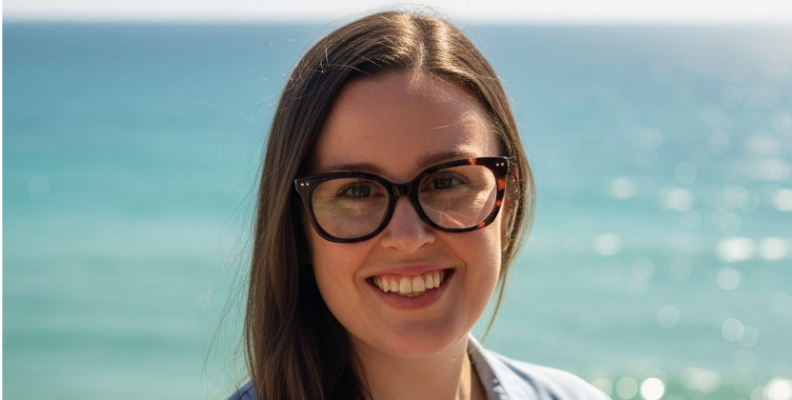
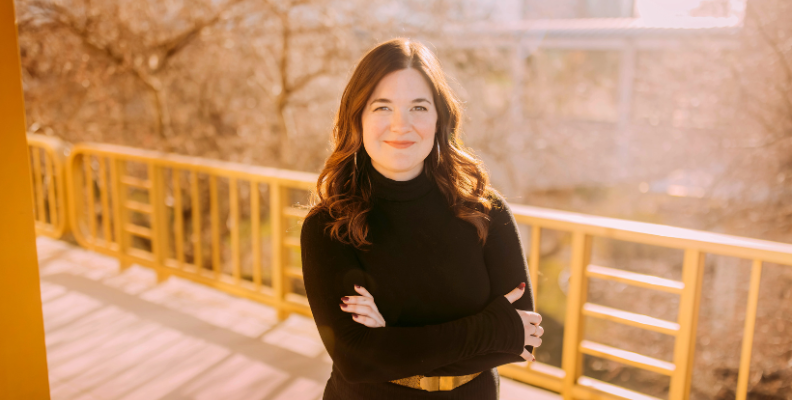
Meet Melisa Ryan, founder of Palm to Ivy, a boutique college admissions consulting firm helping high school students and their families navigate the admissions process with clarity, strategy, and far less stress. Before launching Palm to Ivy, Melisa worked as a Management Consultant at Oliver Wyman serving Fortune 500 clients, led engineering teams as a Product Manager in virtual behavioral healthcare and renewable energy, and even stepped away from corporate life to write a 500-page novel.
What makes Melisa's approach stand out is how naturally her experience braids together. A Columbia graduate who once navigated her own Ivy League admissions process while balancing an IB Diploma and a long list of extracurriculars, she now brings a strategist's structure and an author's instinct for narrative to every student she works with. Her goal is not just stronger applications. It is helping students transform impressive resumes into cohesive, authentic stories that resonate with admissions officers, and walk away with a clearer sense of who they are becoming.
Please share a brief introduction and your business:
My name is Melisa, and I'm the founder of Palm to Ivy, a boutique college admissions consulting firm. Before launching Palm to Ivy, I worked as a Management Consultant helping Fortune 500 companies solve complex business problems, led engineering teams building patient and customer intake software as a Product Manager, and even wrote a 500-page novel. Yet despite all of that, I can honestly say that applying to college was still one of the most stressful and rewarding experiences of my life.
At the time, I was aiming for valedictorian, studying for the SAT, writing 20+ personalized application essays, balancing the IB Diploma Program with my other classes, and managing a long list of extracurriculars, all while applying to Ivy League schools where very few students from my high school had ever been admitted. The pressure felt immense.
But the process also became deeply meaningful for me. I've always been an author at heart, and I loved the introspection involved in stepping back and asking: Who am I, really? What drives me? How do all the different parts of my life connect? Bringing together my interests in psychology, writing, film, theatre, leadership, and community impact into a narrative that felt authentic, compelling, and uniquely my own not only helped me earn admission to Columbia, UPenn, Cornell, and many other top universities, but also gave me a deeper sense of confidence and purpose heading into college.
After years in the corporate world, I found myself drawn back to that experience and to the kind of mentorship I wish more students had access to. Through Palm to Ivy, I now have the opportunity to give back by helping students navigate the admissions process in a way that feels more organized, manageable, and far less overwhelming, while also helping them transform impressive resumes into cohesive, authentic stories that resonate with admissions officers.
Take us back to when you launched. What was your marketing strategy?
Palm to Ivy is still in its early stages, so this is something I'm actively learning and evolving through right now. My approach so far has been very community-focused and relationship-driven. I've been introducing myself to local families, connecting with tutors and others in the education space, and serving as a resource in community Facebook groups by helping answer parents' questions about the admissions process. I've also been writing blog posts where I analyze admissions data to share data-driven insights with families and bring a more analytical lens to the college admissions process.
Because this business is built so heavily on trust and word-of-mouth referrals, I've learned that the most important thing isn't flashy marketing; it's building genuine relationships and showing families how deeply I care about their students and their futures.
Did you always know you wanted to be an entrepreneur?
I've always had an entrepreneurial spirit, even before I would have called it that. I love learning, building, and challenging myself, and entrepreneurship naturally requires all three. Being an entrepreneur means constantly stepping into unfamiliar territory, figuring things out in real time, and becoming a student of whatever your business needs from you at that moment.
I don't know if I always knew I would become an entrepreneur specifically, but looking back, I do think many of my experiences were quietly preparing me for it. My interests have always been interdisciplinary and deeply people-centered, and entrepreneurship has given me the freedom to bring together strategy, storytelling, mentorship, creativity, and community impact in a way that feels very aligned with who I am.
What accomplishments are you the most proud of to date in your business?
I'm most proud of the relationships I've built with my students and families. College admissions can feel overwhelming and emotionally exhausting, but I try to make the experience feel more manageable, empowering, and even enjoyable.
A huge part of my work is helping students realize that they are often far more interesting, multidimensional, and compelling than they give themselves credit for. Some of the most rewarding moments happen during essay conversations, when a student suddenly recognizes the deeper meaning behind an experience they thought was insignificant or begins to understand what truly drives them for the first time.
Over the course of the process, we laugh together, celebrate wins, confront their challenges and struggles, and sometimes even cry while unpacking deeply personal experiences. By the end, these students are not just submitting stronger applications, they often walk away with a clearer understanding of themselves and greater confidence in the person they're becoming. That's the part of this work I cherish most.
When hiring, what is your go-to interview question?
One of my favorite interview questions is: "What accomplishment are you most proud of, how did you achieve it, and why does it matter to you?"
I love this question because it reveals so much beyond what's written on a resume. It helps you understand a person's values, motivations, work ethic, self-awareness, and what genuinely excites them. You also quickly get a sense for whether someone was truly instrumental in the accomplishment they're describing or simply adjacent to it.
I think people are often at their best when they're talking about something they genuinely care about, and the way someone speaks about an accomplishment can tell you a lot about how they think, collaborate, overcome challenges, and define success.
What did you do before starting your own business?
After graduating from Columbia University with degrees in Psychology and Economics, I began my career as a Management Consultant at Oliver Wyman, where I worked alongside incredibly talented teams to solve complex business challenges for companies like ExxonMobil, American Airlines, and Wells Fargo through both qualitative and quantitative analysis. The work was intense and fast-paced, and it taught me how to quickly become deeply knowledgeable in new industries while sharpening my strategic thinking, communication, and analytical skills.
I later transitioned into the tech world as a Business Insights Analyst at Uber Eats, where I helped drive business decisions through data analysis. In many ways, it was storytelling through data: finding patterns, understanding people's behaviors, and communicating insights in a compelling way.
Mental health had always been one of my passions, which eventually led me to a pioneering virtual behavioral healthcare startup called AbleTo. When one of the Product Managers overseeing the patient platform went on maternity leave, I stepped in to lead her engineering team and projects, helping build the software therapists and coaches used to guide patients through their care journeys.
I've also worked as a Product Manager at a renewable energy startup, leading teams of engineers and administrators while building technology designed to improve operational efficiency and customer experience.
While these experiences helped shape me into a strategic and empathetic leader, over time I realized I had drifted away from some of the things that mattered most to me creatively and personally, especially writing. That realization led me to step away from product management for a period of time to write my first novel, a speculative story about navigating a rapidly changing world without losing sight of our values, humanity, love, and hope.
What made you take the leap to start your own business?
Writing a novel is a very solitary experience, and I deeply missed the interpersonal side of leading, mentoring, and helping others grow. I wanted to create a space where I could do that again without returning to a traditional corporate role, while still staying connected to the creative world of writing and storytelling. That's when I realized college admissions consulting was the perfect fit.
I had already been helping students from my high school through their own admissions journeys, and I loved it. There's something incredibly meaningful about helping a student step back, reflect on their life, and realize that the experiences, struggles, passions, and dreams that feel disconnected to them actually tell a powerful story about who they are becoming.
I knew I could bring together everything I'd learned — from my own Ivy League admissions experience to product leadership and storytelling — and build something deeply personal and impactful. But I also wanted to do it the right way, so before launching Palm to Ivy, I spent time immersing myself in the modern admissions landscape and consulting for an existing private admissions firm.
Do you have any recent wins?
I just wrapped up an admissions cycle and couldn't be prouder of my students. Their hard work earned them admission to Cornell, Georgetown, UCLA, University of Michigan, USC, NYU, University of Miami, and many other Top 50 universities.
Who are your customers?
I work with high school students and their families, most often starting junior year or the summer before senior year, when it's time to build balanced college lists, solidify strategy, strengthen resumes, and begin tackling application essays. Junior summer is the most critical time in a student's admissions journey.
That said, the earlier we connect, even as early as freshman or sophomore year, the more strategically I can help guide students through high school. From course selection and extracurricular involvement to competitions, summer programs, internships, leadership opportunities, and service projects, early planning gives students more time to build both a strong profile and an impactful, authentic narrative around their interests and goals.
I also don't really think of the families I work with as "customers." By the end of the process, I know my students and families incredibly well, and I become deeply invested in their growth, happiness, and success. It's a very personal journey, and the relationships that come out of it are often lasting ones.
What's your top productivity tip?
Roadmaps. I used to build roadmaps for Fortune 500 companies and product teams, and now I build them for myself and my students. When you clearly map out everything that needs to happen by a certain date, big goals stop feeling overwhelming. You can prioritize effectively, break large tasks into manageable pieces, and make steady progress without constantly feeling like you're drowning in everything at once.
I think productivity is less about pushing yourself endlessly and more about creating enough structure and clarity that you can move through challenges calmly and intentionally.
What's your favorite business tool?
There are so many tools I love, but Salesforce is definitely high on the list since I spent years working as a Salesforce Product Manager. It's incredibly powerful for building systems, managing relationships, and creating operational structure at scale.
I also love Lucidchart for mapping out ideas, roadmaps, and processes visually, Adobe Creative Cloud for anything creative or branding-related, and Trello for staying organized and managing moving pieces across projects and students. I'm a very visual and systems-oriented person, so I'm always drawn to tools that help turn complexity into clarity.
What's your approach to work-life balance?
I think work-life balance comes from having structure, while also giving yourself permission to step outside of that structure when your business, relationships, or well-being genuinely need it. Routine is incredibly important to me because it creates stability, momentum, and clarity, but I also don't believe in becoming a prisoner to our schedules and habits.
Some seasons of life and business require more of us, while others require rest, connection, creativity, or simply being present with the people we love. I think the healthiest approach is learning how to recognize those moments and adapt intentionally instead of trying to force perfect balance at all times.
How do you avoid burn-out?
I think doing work that genuinely fulfills you and allows you to help others goes a long way in preventing burnout. There's a big difference between being tired and feeling disconnected from what you're doing.
That said, even work we love can become exhausting when we push ourselves too hard for too long. I try to listen to my body and my spirit when they tell me I need to step back and recharge, even if that means doing something that doesn't look "productive" in the moment. Sometimes rest, creativity, connection, or simply slowing down for a little while is exactly what allows us to return with clarity and energy later.
We can't build sustainably if we're constantly running on empty and neglecting ourselves in the process.
What advice do you have for aspiring Entreprenistas?
Start with a problem that actually bothers you. Not something that seems interesting or marketable, but something that you genuinely want solved. You'll need that level of conviction when things get harder than expected.
The goal isn't to have everything figured out at the start. It's to stay close to the problem long enough to get to something real.
What's next for your business? What can we expect to see over the next few years?
I'm excited to continue growing Palm to Ivy and helping more students and families with my data-driven, strategic and deeply personalized approach to college admissions. My goal has never been to build an impersonal, high-volume business. I want Palm to Ivy to remain deeply personalized and relationship-driven while helping more students navigate the admissions process with clarity, confidence, and far less stress. Over the next few years, I hope to continue building a strong community around Palm to Ivy while expanding the ways I support students, not just in gaining admission to great schools, but in developing the self-awareness, confidence, and sense of purpose that will serve them long after college admissions is over.
Melisa's story is a reminder that the most compelling applications are rarely about doing more, they are about helping a student step back, see the through line in everything they have already done, and tell that story with confidence. We are so glad to have her in the Entreprenista community and cannot wait to watch Palm to Ivy continue to grow.
Want to connect with founders like Melisa? Visit the Entreprenista League to explore our community and discover more stories of women building businesses that truly matter.
About the Author
Entreprenista League

The Latest
Heather Lillico Helps Burnt-Out Founders Rewire Their Nervous Systems
The former nutritionist burnt out building her nutrition business, and the tools that brought her back to calm now anchor her coaching for women founders.
Elizabeth Watson Helps Founders Recover Their Lost Energy

Automate Your Site with a 1-Month Free Trial
Kartra