


.avif)









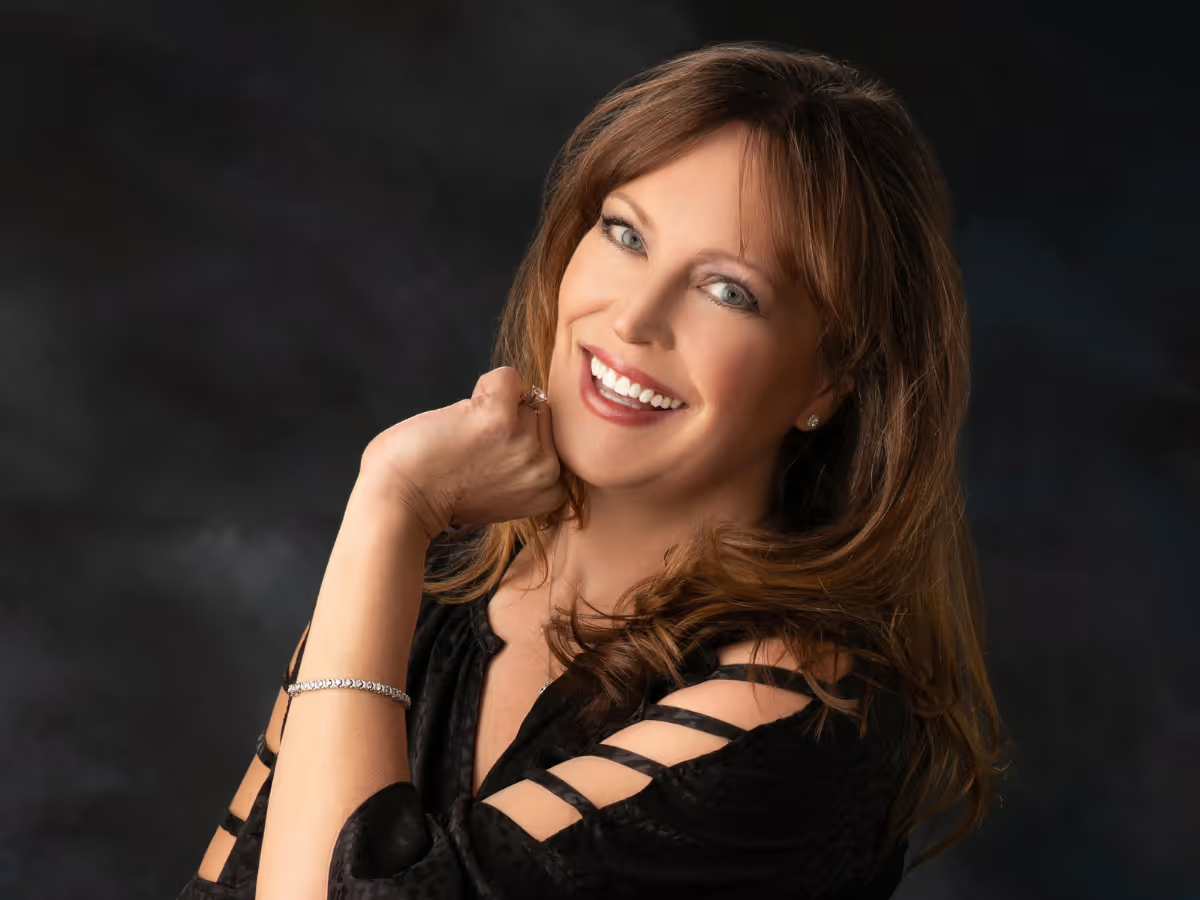
Lora Cheadle of Life Choreography Coaching & Advocacy on Healing Betrayal and Rebuilding Self Trust
March 4, 2026

Written by
Lora Cheadle, Founder of Life Choreography Coaching & Advocacy, on Helping Women Rebuild Identity and Self Trust After Betrayal
Lora Cheadle is the founder of Life Choreography Coaching & Advocacy, where she helps women rebuild clarity, self trust, and identity after betrayal, both personal and professional. A betrayal trauma expert, TEDx speaker, former attorney, and author of It’s Not Burnout; It’s Betrayal, Lora works at the intersection of leadership, wellbeing, and identity rupture.
Grounded in lived experience and decades of legal and wellness expertise, her work supports women navigating infidelity, burnout, broken expectations, and moments when what they thought they were building suddenly collapses. Through integrated emotional, somatic, relational, and practical support, she helps clients move forward without self abandonment.
Please share a brief introduction and your business:
I’m Lora Cheadle, a betrayal trauma expert, TEDx speaker, and former attorney who helps women rebuild clarity, self-trust, and identity after betrayal—both personal and professional. I work with individuals, couples, entrepreneurs, and organizations navigating burnout, infidelity, broken expectations, and moments where what they thought they were building suddenly shatters.
My work is grounded in a simple truth: betrayal is betrayal, whether it happens in a marriage, a business, or a system we once trusted. When expectations collapse, identity often does too, and many women begin defining themselves through the rupture rather than their truth. I help women understand what’s happening beneath the surface and reconnect to themselves so they can lead, decide, and move forward without self-abandonment.
My pivot from law to leadership to betrayal work came as a result of my own infidelity experience, which, while devastating, became the catalyst for my own clarity, strength, and sovereignty. That lived experience deeply informs how I guide clients through repair, self-trust, and sustainable growth. I’m the author of It’s Not Burnout; It’s Betrayal and FLAUNT! Drop Your Cover and Reveal Your Smart, Sexy & Spiritual Self, host of FLAUNT! Create a Life You Love After Infidelity or Betrayal, and I speak and teach leadership, wellbeing, and identity for women who want to make a meaningful impact without losing themselves in the process.
Are you a mamaprenista?
My children are adults now, but I very much see myself as a Mamaprenista. I’ve always viewed my business as another living responsibility. One that, like family, goes through seasons of needing more or less attention.
For me, managing both has never been about perfect balance. It’s been about consciously apportioning time and energy based on who needs what in the moment, without guilt or comparison. Some seasons require more presence at home, others more focus on work. Honoring that rhythm has allowed me to stay engaged, grounded, and committed over the long term.
Take us back to when you launched? What was your marketing strategy?
When I first launched my business, I had no marketing strategy! I talked to people. I shared what I was doing. I told the truth about my experience and showed up in spaces where real conversations were happening.
I also had a podcast where I spoke openly about infidelity, betrayal, and the confusion that comes with it. People started sending episodes to friends, and word of mouth grew from there. It wasn’t fast or fancy, but it was real.
Did it go as planned? Not exactly. It worked, but it was slow and uneven. Many people didn’t fully understand the value of what I offered or what truly integrated, high-quality support looked like. The healing space can be patchy and confusing, with a heavy emphasis on therapy alone, even though real healing often requires much more.
Did you always know you wanted to be an entrepreneur?
No!
What accomplishments are you the most proud of to date in your business?
I’m proud of the tangible milestones: the two published books, my TEDx talk, a book contract with New World Library, and a podcast that’s reached over a million listeners. Those achievements matter, and I’m grateful for them.
I’m also proud of the quiet impact my work has had. The private messages and conversations from women who tell me that something I said helped them feel less alone, more grounded, or more willing to trust themselves again. That kind of impact is the reason I do this work and continue showing up, even when times are hard.
But what I’m most proud of is who I’ve become in the process of building this business. This journey has required me to grow in ways I didn’t anticipate. To step into my voice, trust my authority, fail publicly, recalibrate, and keep showing up anyway. It’s tested my confidence, my patience, and my willingness to lead without certainty. More than any single achievement, that feels like a real accomplishment.
What is one thing you wish you had known when you started your Entreprenista journey?
I wish I had understood earlier that building a business isn’t linear; it’s more of a spiral.
You revisit the same questions around direction again and again, but each time from a deeper, wiser place. Early on, I thought revisiting something meant I was doing it wrong or not moving forward. Now I see it as integration.
Understanding that would have saved me a lot of self-judgment. Once I embraced that “being there” wasn’t the goal, I stopped worrying so much and started being more present in my entrepreneurial journey.
When hiring, what is your go-to interview question?
I don't have a single go-to interview question.
What did you do before starting your own business?
Before starting my own business, I spent years practicing law as a corporate attorney, along with a brief stint in family law and insurance defense. That experience gave me a deep understanding of systems, contracts, risk, and the real-world impact of broken trust—professionally and personally.
At the same time, I had a parallel career in fitness that began long before wellness was mainstream. I’ve been teaching fitness classes since 1988, and even while practicing law, I taught classes over my lunch hour at the corporate wellness center. Movement, nervous-system regulation, and embodied resilience have always been part of how I understand leadership and wellbeing.
That combination—legal training and decades of hands-on wellness work—shapes everything I do today. It allows me to work at the intersection of logic and lived experience, helping clients navigate betrayal, burnout, and identity rupture with both clarity and compassion.
What made you take the leap to start your own business?
There wasn’t a single dramatic leap into entrepreneurship. It unfolded slowly, and in many ways, it chose me.
After leaving the practice of law to raise my children, I began a very small, boutique wellness practice. It wasn’t meant to be a “real” business or a financial engine—it was a way to stay connected to the work I loved: movement, wellbeing, and supporting people in feeling better in their bodies and lives. It was intentionally part-time, flexible, and designed to fit around my family.
The true turning point came later, through my own experience navigating infidelity. That journey was complex, disorienting, and often deeply frustrating—not just emotionally, but practically. I saw firsthand how fragmented the available support was, and how little real-world understanding there was around trauma, complex PTSD, embodiment, and the lived realities of betrayal. What was offered didn’t reflect what my husband and I actually needed to heal and move forward. So, I began creating it.
What started as personal necessity became a professional purpose. I built a business I couldn’t find. One that integrated emotional, somatic, relational, and practical support, and treated betrayal not as a personal failure, but as a profound rupture that required nuanced, compassionate, and embodied care, for both partners. That work has grown organically into the business I lead today.
Do you have any recent wins?
My biggest win from last year was releasing my second book, It’s Not Burnout; It’s Betrayal: 5 Tools to FUEL UP & Thrive. The launch required more adaptability than expected, and I’m proud of how we stayed grounded, pivoted thoughtfully, and chose to celebrate the work and its message despite one challenge after another. Reaching best seller status was a powerful reminder that impact doesn’t depend on perfect conditions.
I’m also proud of a new high-touch, low-cost group program I launched this past year. It’s created a beautiful, safe space for deeper connection and shared healing. Watching women support one another and step into their own power has been one of the most unexpectedly rewarding parts of the year.
What's one app on your phone that you cannot live without?
I use Marco Polo both professionally and personally, and I honestly couldn’t imagine life without it.
I use asynchronous messaging with clients so they can get real support in the moment, when they’re spiraling or overwhelmed, instead of waiting a week for a scheduled session. That kind of timely connection makes a real difference.
It’s also how I stay close with my best friends. We’re all founders with full lives, families, and complex schedules, and trying to coordinate phone calls just doesn’t work. Marco Polo lets us stay deeply connected on our own time, in ways that actually fit our lives and honor the way we care for one another.
Who are your customers?
I work with women healing from intimate betrayal, couples navigating infidelity, and entrepreneurs and professionals experiencing burnout, leadership strain, or broken expectations. Many of my clients are high-responsibility leaders who appear successful on the outside but are privately navigating disorientation, self-doubt, or identity loss after trust has been broken. My work helps them restore clarity, agency, and sustainable momentum.
What's your top productivity tip?
My top productivity tip is surprisingly simple: I use focus music timers set for the exact amount of time I have to work. Nothing fancy—often just YouTube videos.
If I have 60 minutes to clear email, I use a 60-minute timer. If I have 20 minutes before a session and want to create a few Canva designs, I set a 20-minute timer and work until it ends. Having a clear container helps me stay focused, avoid overthinking, and actually finish what I start.
It’s a small practice, but it’s made a big difference in how intentionally I use my time.
What's your favorite business tool?
Descript and Vidyo.ai—especially Descript, as I genuinely enjoy editing my own podcast. My undergraduate degree was in Radio and TV production, I even worked for an NPR affiliate station early on, and editing has always felt like playtime to me, not something I want to outsource. These tools make it easy to stay hands-on with the creative process while still moving quickly and efficiently.
What's your approach to work-life balance?
I don’t really believe in work-life balance as a fixed state or even as something to strive for. I think more in terms of seasons.
There are seasons where personal life takes precedence, like when I stepped back from practicing law to raise my family. There have also been seasons of business growth that required long hours, focus, and sacrifice, followed by seasons of reward and recuperation. Recognizing those shifts has helped me stay clear and committed without constantly judging myself or wanting to be where I wasn't.
For me, balance is fluid. Like walking, we’re always moving through balance, imbalance, and recovery. When I understand what season I’m in, I can give my attention to what matters most in that moment instead of trying to do everything at once. That mindset has allowed me to work deeply, rest intentionally, and stay aligned over the long term.
How do you avoid burn-out?
I avoid burnout by practicing the same framework I teach. I run myself through my FUEL UP process regularly, not as a program, but as a personal check-in.
That means reconnecting to my why, getting honest about what’s really going on beneath the surface, managing expectations (especially my own), building in laughter, joy, and moments to luxuriate every day, and keeping the promises I make to myself around rest, wellness, boundaries, and beauty.
Burnout, for me, is a signal, not a life sentence. When I listen early and respond, instead of pushing harder, I’m able to course-correct before exhaustion takes over.
What advice do you have for aspiring Entreprenistas?
Connect with others, early and often. Don’t try to pretend you’re further along than you are! Curiosity and honesty will take you much farther than performance ever will.
Be willing to learn, to pivot, and to fail forward. Building a business will ask you to stretch in ways you can’t plan for, and the women who thrive are the ones who stay open instead of rigid. Success isn’t about getting everything right; it’s about staying engaged, responsive, and willing to grow as you go.
From practicing law to teaching fitness for decades to authoring two books and reaching over a million podcast listeners, Lora Cheadle has built a business rooted in depth, nuance, and sustainable growth. More than the milestones, she is most proud of the evolution required to lead with authority, recalibrate publicly, and keep showing up with integrity.
If you are a woman founder building meaningful work and navigating seasons of growth, rupture, or reinvention, Entreprenista connects you with the relationships and community that help you grow without feeling alone. Learn more about joining Entreprenista League.
About the Author
Entreprenista League

The Latest

Three Master's Degrees, a Doctorate, and Still Afraid to Sell: Where Fear of Failure Really Starts
I hold a doctorate and have lived on three continents, yet a test I failed at age 5 still shows up whenever someone questions what I know. If you dread selling, an earlier version of you may be running the room, and she can be released.
Elyce Arons, Frances Valentine: Building Two Iconic Brands and Finding Joy in Chapter Two

Automate Your Site with a 1-Month Free Trial
Kartra